 Tompkins Robotics
Returns processing is one of the most overlooked automation opportunities in distribution operations. Companies invest heavily in forward logistics, but reverse logistics often stays manual, and the inefficiencies pile up fast. Some retailers and e-commerce operations are figuring out that their existing sortation infrastructure can handle returns when properly configured, cutting processing time and labor costs significantly. The key? Treat returns as part of your fulfillment strategy, not a separate problem you deal with after the fact.
Returns land on your dock looking nothing like the pristine packages that left your facility weeks earlier. Damaged boxes. Missing labels. Products that may or may not be resellable. Your team sorts through each item manually, making split-second decisions about whether something goes back to inventory, heads to liquidation, or ships back to the vendor.
It's expensive work. But what if returns could flow as smoothly as your outbound operations, making those items available for resale as soon as possible?
The Problem With Treating Returns as an Exception
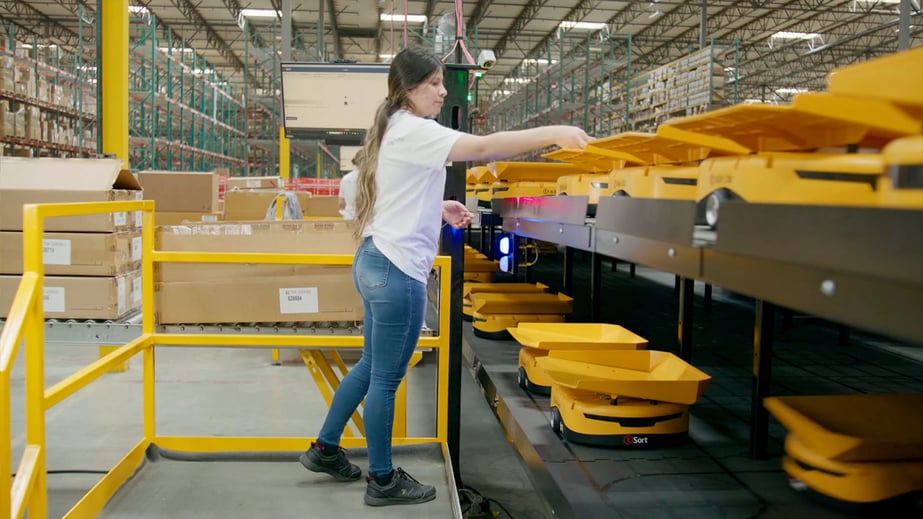
Walk through any distribution center during peak return season and you'll see the same scene: workers hunched over tables, manually sorting returned merchandise into different piles. Electronics here. Apparel there. Damaged goods in the corner.
The process looks simple but hides real complexity. Each product category requires different inspection protocols. Damaged items follow different workflows than customer-changed-mind returns. Items heading back to vendors need separate handling from products returning to stock. Manual systems force workers to remember dozens of different routing rules while making quality decisions under time pressure.
During post-holiday, spring/summer apparel, or back-to-school return surges, these bottlenecks get painful. Workers who normally handle outbound orders get pulled into returns processing. Staging areas overflow. Items sit in limbo while teams catch up with the backlog.
Space is another problem entirely. Returns need more room than outbound shipments because they don't move in a straight line from arrival to departure. They pause for inspection. They get sorted by condition and destination. They wait in staging areas. Without dedicated returns processing zones, these items mix with outbound inventory, and the confusion slows everything down.
Why Most Returns Operations Break Down
Here's the issue: most operations design their returns processes around whatever's left after optimizing forward flows. Returns get the leftover space, the overflow staff, and whatever systems aren't already committed to outbound fulfillment.
This creates predictable failure points. Manual returns processing follows a linear sequence: receive, inspect, sort, route, dispose. Human decisions are required at every step. Each decision point creates a queue. Each queue creates delays that compound during high-volume periods.
Quality standards become inconsistent too. Different workers apply different criteria when deciding whether returned merchandise is resellable. Some are conservative and send borderline items to liquidation. Others are aggressive and approve damaged goods for resale. These inconsistencies create downstream problems that affect customer satisfaction and inventory accuracy for weeks.
But the biggest issue is visibility. Manual systems provide almost no real-time insight into returns processing status. Operations managers can't track individual items, identify bottlenecks as they develop, or predict when processing will complete and make items available for resale. You're essentially flying blind through one of your most complex operational challenges.
The Cost Per Unit Reality
-
Manual sortation typically costs 5x more per unit than automated processing. That multiplier includes labor, error correction, and slower cycle times.
-
If your margins are thin, you can lose all your profit on the extra spend during peak. You're generating revenue but burning it on inefficient fulfillment operations.
How Smart Operations Handle Returns Differently
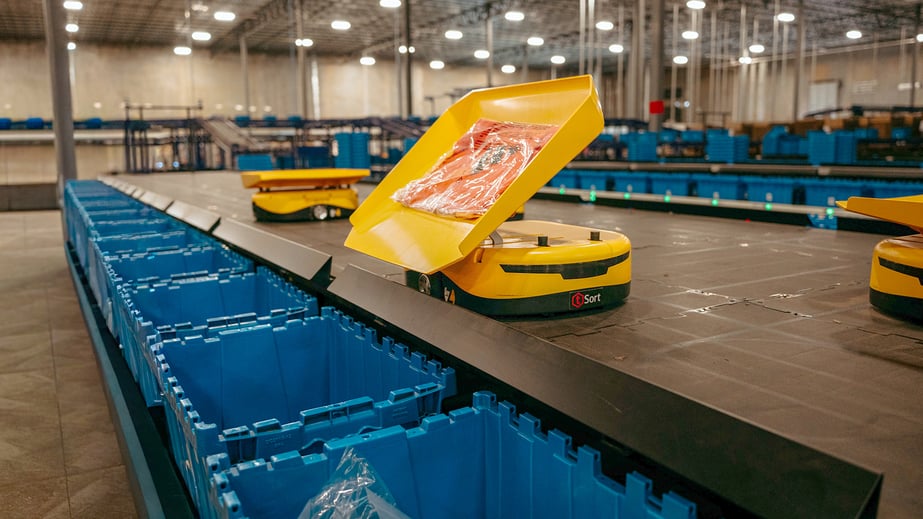
The breakthrough insight is simple: sortation systems designed for high performance and flexibility in outbound processing can handle returns just as effectively. Robotic, software-driven systems make this possible because they can adapt to changing needs far better than traditional conveyor-based systems.
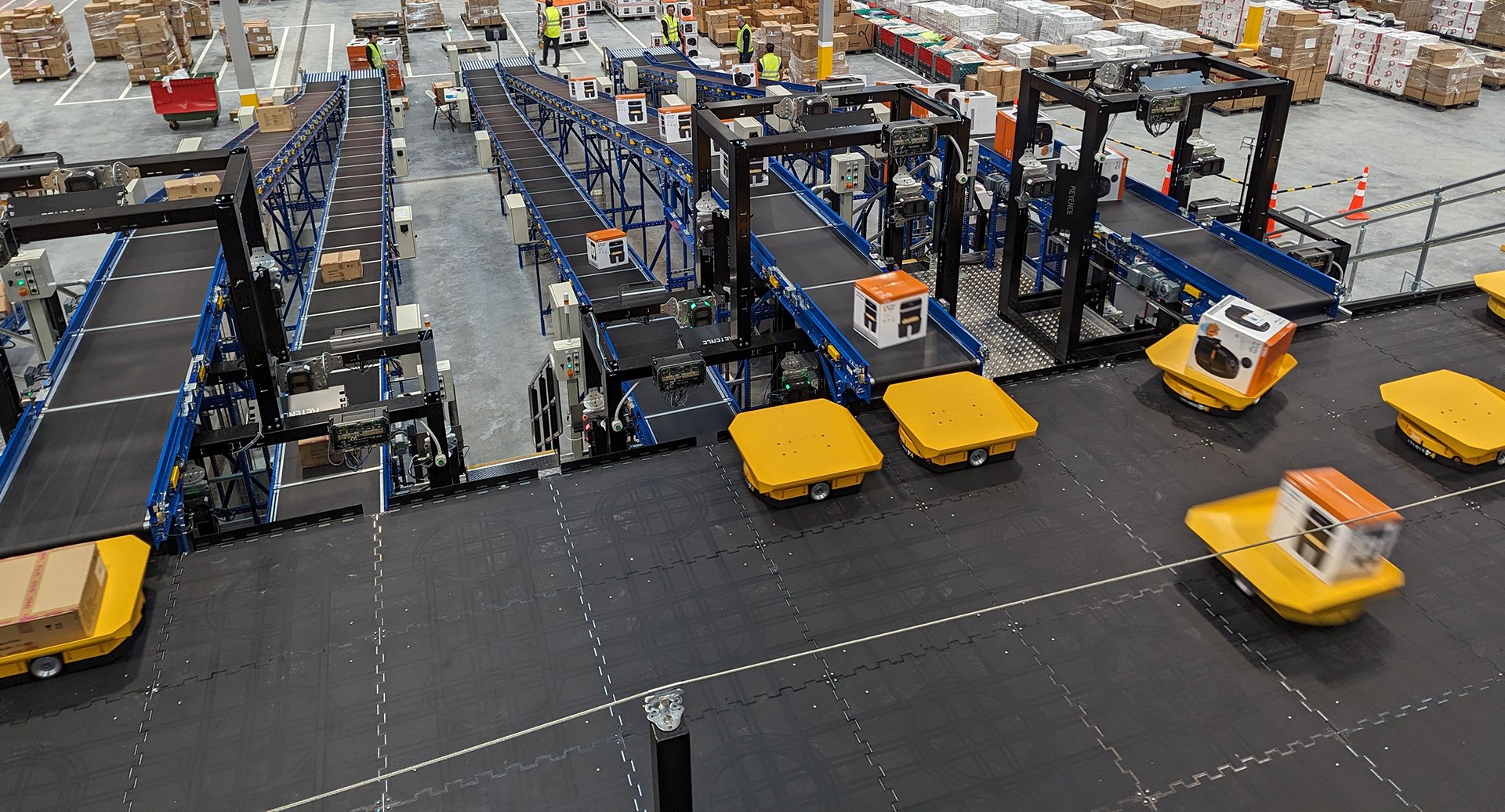
Operations typically face two paths: invest in a separate returns-only solution, or look at a single integrated system that can accommodate both returns and fulfillment. Leading operations choose integration, incorporating reverse logistics into their outbound automation setup rather than building parallel infrastructure. Items enter through dedicated induction points designed for damaged packaging and irregular shapes. The system makes routing decisions automatically based on predetermined criteria. Products flow to appropriate destinations without manual handling between decision points.
A returned electronic device automatically routes to your quality inspection station. Apparel returns flow to the right consolidation area. Items marked for vendor return go directly to outbound shipping zones. The complexity that would normally require constant human decision-making gets handled by the system itself.
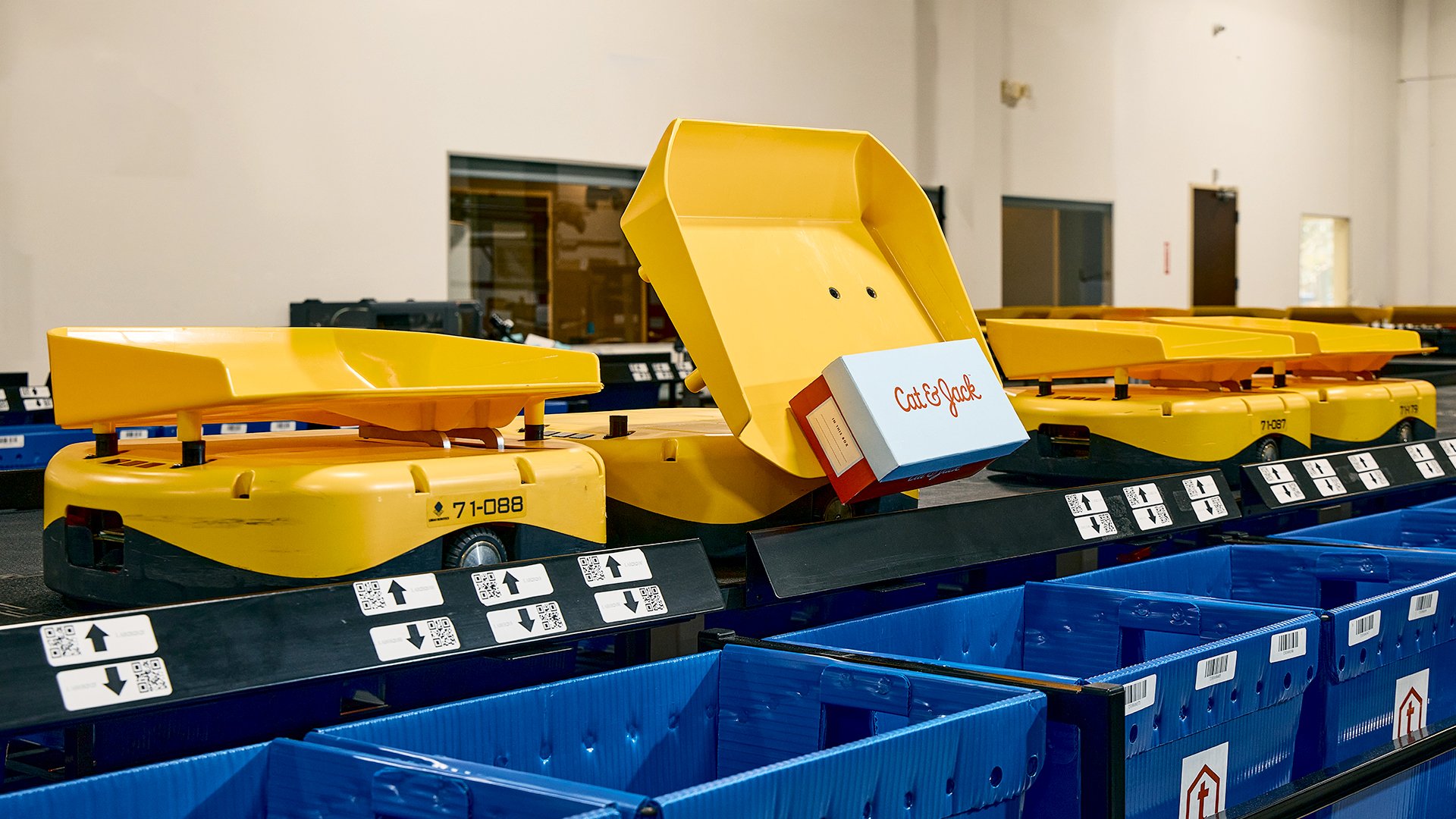
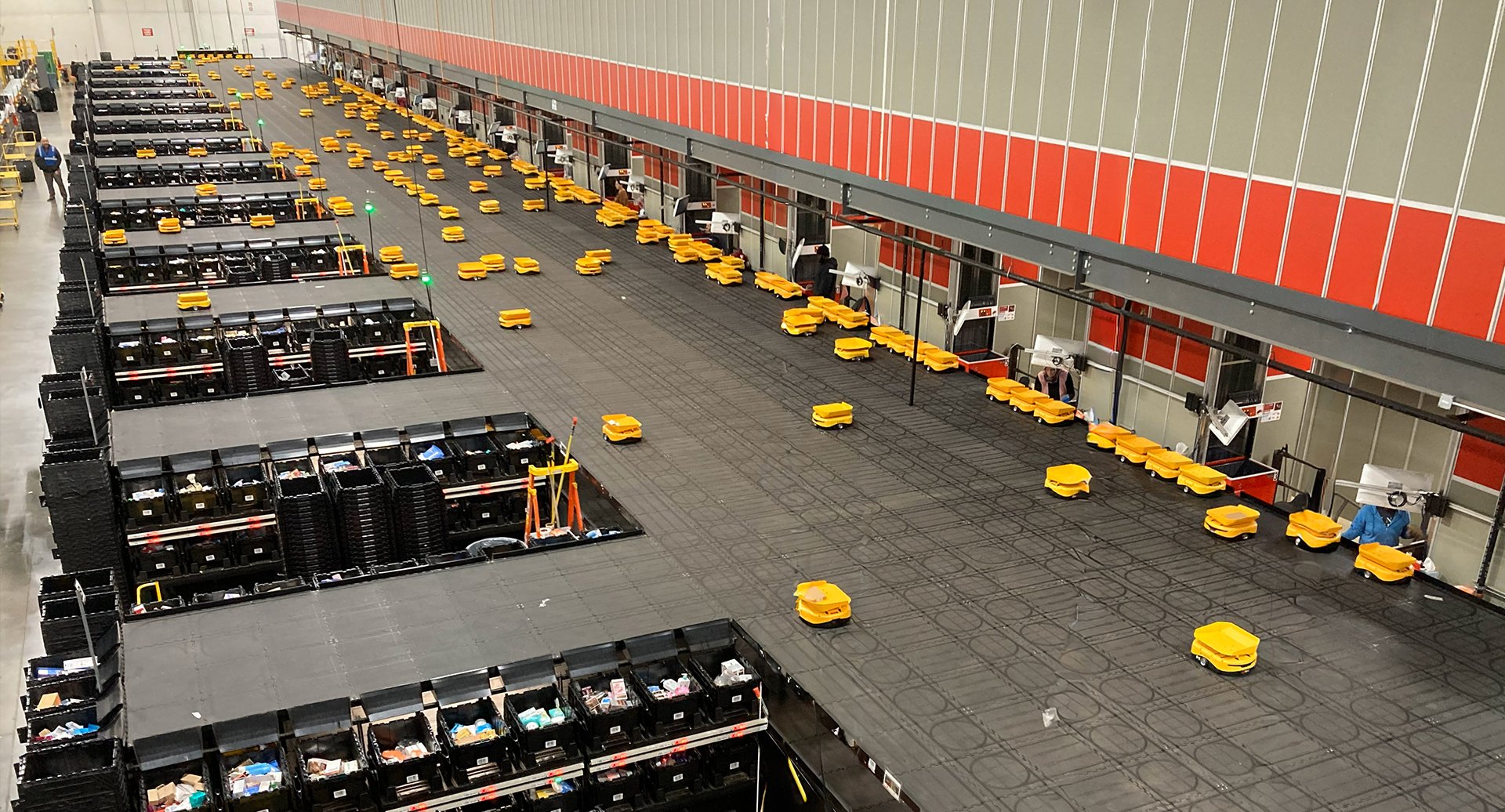
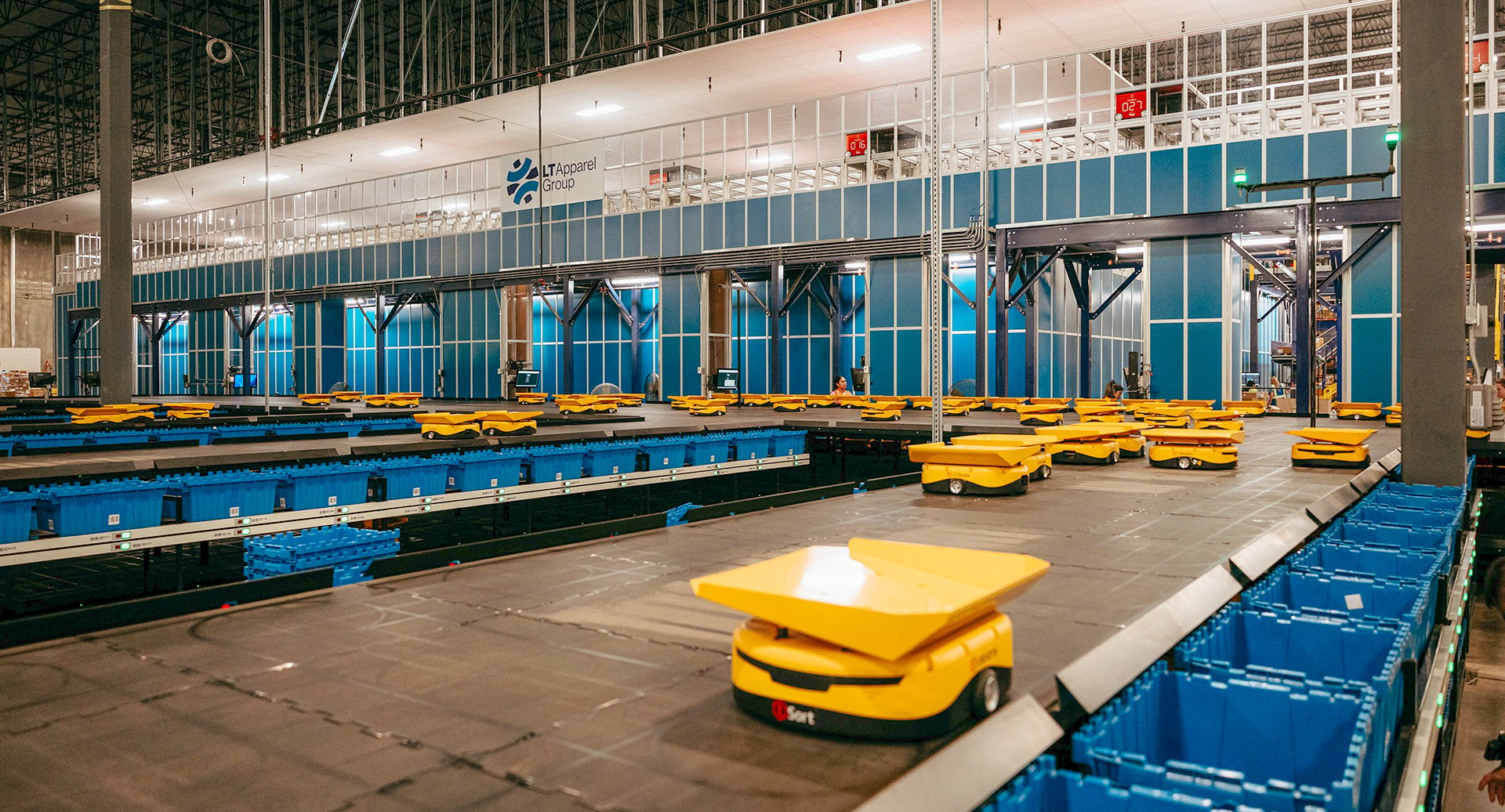
Tompkins Robotics tSort works well for this kind of flexible routing because it's designed to handle diverse item types and destinations. Unlike fixed conveyor systems that lock you into predetermined paths, tSort robots adapt routing decisions in real time based on inspection results and inventory policies. A single tSort system can handle outbound orders and inbound returns simultaneously, directing each item to its appropriate destination without manual intervention.
The visibility improvement alone changes the game. You can track individual items from the moment they enter the system through final disposition. Bottlenecks become visible in real time instead of after they've already created a backlog. Staffing decisions get made based on actual throughput data rather than guesswork.
For a list of warehouse sortation systems you need to know, click here.
Making Sortation Work for Reverse Flows
Returns processing requires different system configuration than pure outbound optimization, but the changes are straightforward.
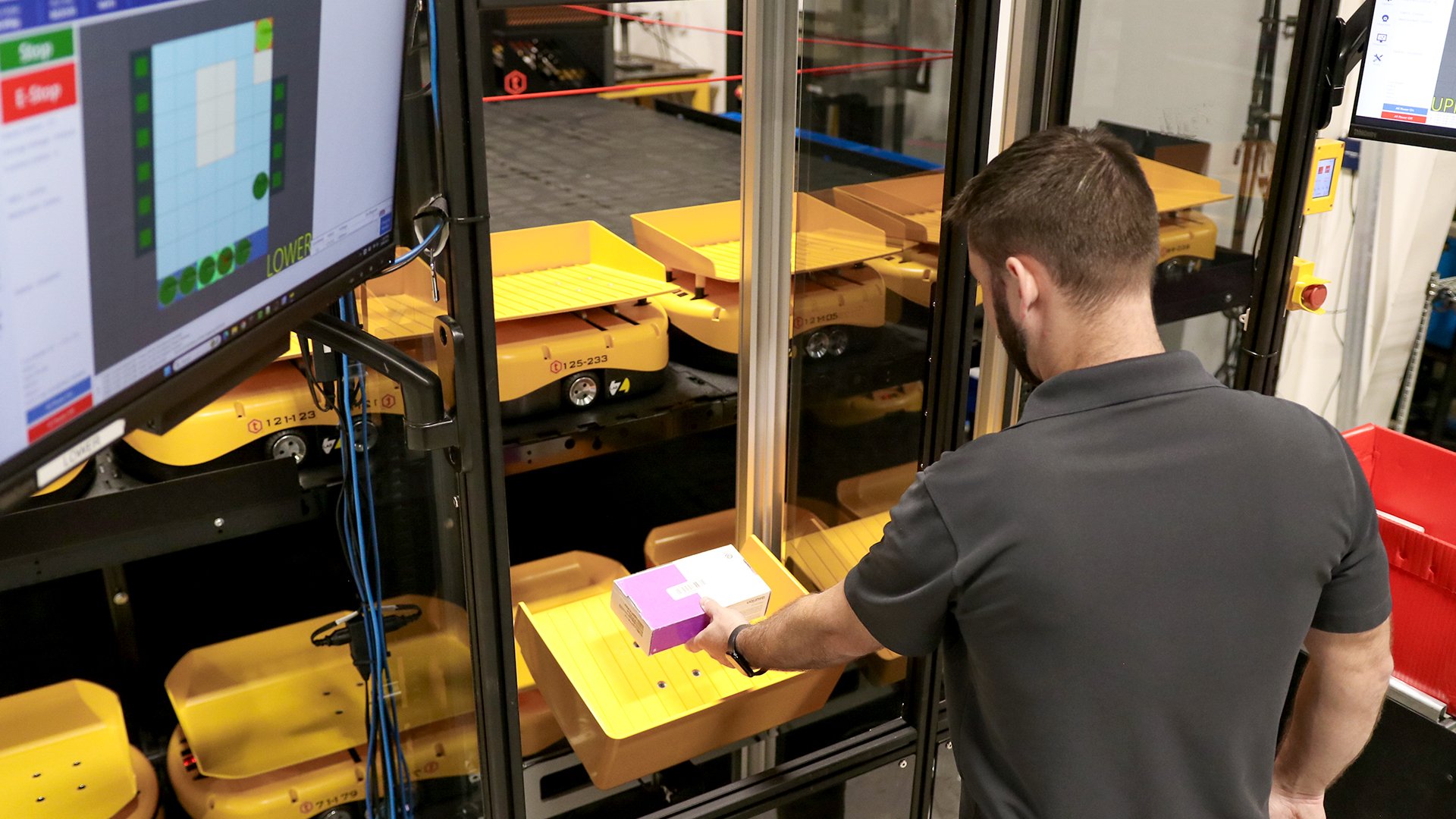
You need dedicated induction stations equipped for the realities of returned merchandise: damaged packaging, missing labels, loose items, items in polybags, and odd-shaped items that would jam a standard conveyor. These stations include manual override capabilities and the ability to sort boxes so problem items don't bring the entire system to a halt.
The routing logic gets more involved. Instead of simple destination-based sorting, the system routes items based on condition codes assigned during inspection. "Resellable" items go to standard inventory locations. "Damaged" items flow to repair stations or liquidation areas. "Vendor return" items route to outbound processing.
tSort's modular design makes this kind of flexible configuration practical. You can dedicate specific zones for returns processing while maintaining full outbound capacity. The system handles everything from small parcels to larger returned items, routing each to appropriate destinations based on your reverse logistics workflows. Since there are no fixed tracks or conveyors, you can reconfigure destinations and workflows as your returns processing needs change.
Returns processing also demands more destination flexibility than outbound operations. Your system needs to accommodate multiple inventory locations, quality inspection stations, repair areas, liquidation zones, and vendor return staging. Most operations dedicate a substantial portion of their sortation destinations specifically to returns processing.
Integration with inspection workflows is where it really matters. Items that pass quality checks route automatically to appropriate inventory locations. Items that fail get sent to disposal or liquidation areas without additional manual handling. The decision points that used to require human intervention become automated based on inspection results.
What Changes When You Get This Right
The operational improvements show up quickly across multiple areas.
Processing speed improves because you eliminate the manual routing decisions and material handling that eat up most of the time in traditional returns operations. Items move from inspection to final destination in minutes instead of hours or days. That acceleration means returned inventory gets back into circulation faster, improving availability for new orders.
Your labor costs shift in interesting ways. Workers stop spending their time on repetitive material handling and focus on exception processing and quality inspection, the tasks that actually require human judgment. The jobs become more engaging and productive while reducing the physical strain of constant lifting and walking.
The scalability advantages show up during peak return periods. Manual operations require proportional staffing increases to handle volume spikes. Automated systems like tSort can absorb return surges with minimal additional labor. The same robots handling your outbound peak season can process increased return volumes without the hiring challenges that plague manual operations.
Space utilization improves because automated flow-through processing eliminates most staging requirements. Items move directly from inspection to their final destination without sitting in intermediate holding areas. You get warehouse space back for activities that actually generate revenue.
Processing accuracy goes up too. Automated routing eliminates the human decision-making errors that send items to wrong destinations. Consistent routing logic ensures products reach the right places based on predetermined criteria rather than whoever happens to be working that shift.
Getting There From Here
The implementation isn't as complex as it might seem, but it does require coordination across systems, processes, and people.
Your warehouse management system is the brain of the operation. It needs to communicate constantly with the sortation control system, providing real-time item disposition decisions based on product data, condition codes, and inventory policies. The integration work typically involves API development and testing, but it's not reinventing the wheel.
Quality control station design affects everything downstream. These stations need ergonomic layouts and integrated technology: barcode scanners, condition code entry systems, direct links to sortation routing logic. The better designed these stations are, the faster your overall processing becomes.
Transcend, Tompkins Robotics' software platform, manages these integrations. It connects with your existing WMS through standard APIs while providing real-time visibility into returns processing status. The platform's microservices architecture allows individual components to scale independently, so you can handle return volume spikes without system-wide disruption.
The workforce transition requires real attention. People move from manual material handling to system monitoring and exception management. Training focuses on system operation, quality standards, and troubleshooting rather than physical processes. Most teams adapt quickly because the new roles are less physically demanding and more engaging.
Performance monitoring becomes ongoing work. You track processing time per item, destination accuracy rates, exception handling frequency, and space utilization efficiency. Regular system tuning based on this data drives additional improvements after the initial implementation stabilizes.
Measuring Success in Returns Automation
The metrics that matter fall into three categories, and they're all connected.
Operational efficiency shows up in processing time per item, daily throughput capacity, and accuracy rates. These metrics help optimize system configuration and staffing decisions on an ongoing basis.
Financial impact appears in labor cost per returned item, total returns processing cost, inventory recovery rates, and working capital effects from faster processing. Most operations find that labor savings alone justify the investment.
Customer experience improves through faster return-to-stock cycle times, quicker refund processing, and a better overall returns experience. These benefits often surprise operations teams who expected purely internal improvements.
The best operations track these metrics regularly and use the data for continuous optimization. System configuration changes, staffing adjustments, and process improvements all get driven by actual performance data rather than assumptions about what should work.
Even if your order fulfillment solution and technology are running smoothly, tSort can scale to fit a returns-only implementation. The modular design lets you address your most pressing operational challenge without disrupting existing fulfillment processes.
FAQs
Explore Our Customer Case Studies
Ready to Rethink Your Reverse Logistics Strategy?