 Tompkins Robotics
About Kmart
Leading Discount Retailer
Kmart Australia, part of Wesfarmers, is a leading discount retailer operating more than 300 stores across Australia and New Zealand. Known for its high-volume, fast-moving product assortment, Kmart relies on efficient, scalable distribution and fulfillment operations to keep stores consistently stocked and support ongoing growth.
The Challenge
Scaling Store Replenishment Across a Complex Network
Kmart’s distribution network supports over 300 stores and tens of thousands of SKUs across a diverse product mix. This created several operational challenges:
-
Managing high volumes of cases, inner packs, and eaches
-
Meeting increasing throughput demands driven by store growth
-
Addressing ongoing labor constraints
-
Optimizing space within existing facilities
-
Controlling capital investment while expanding capacity
Adding another layer of complexity, Kmart's new distribution and fulfillment hub was being developed during the COVID-19 pandemic, creating additional challenges around installation, testing, and deployment.
Kmart needed a flexible, cost-effective automation solution that could scale with demand while maintaining operational efficiency.


The Solution
Tompkins Robotics tSort
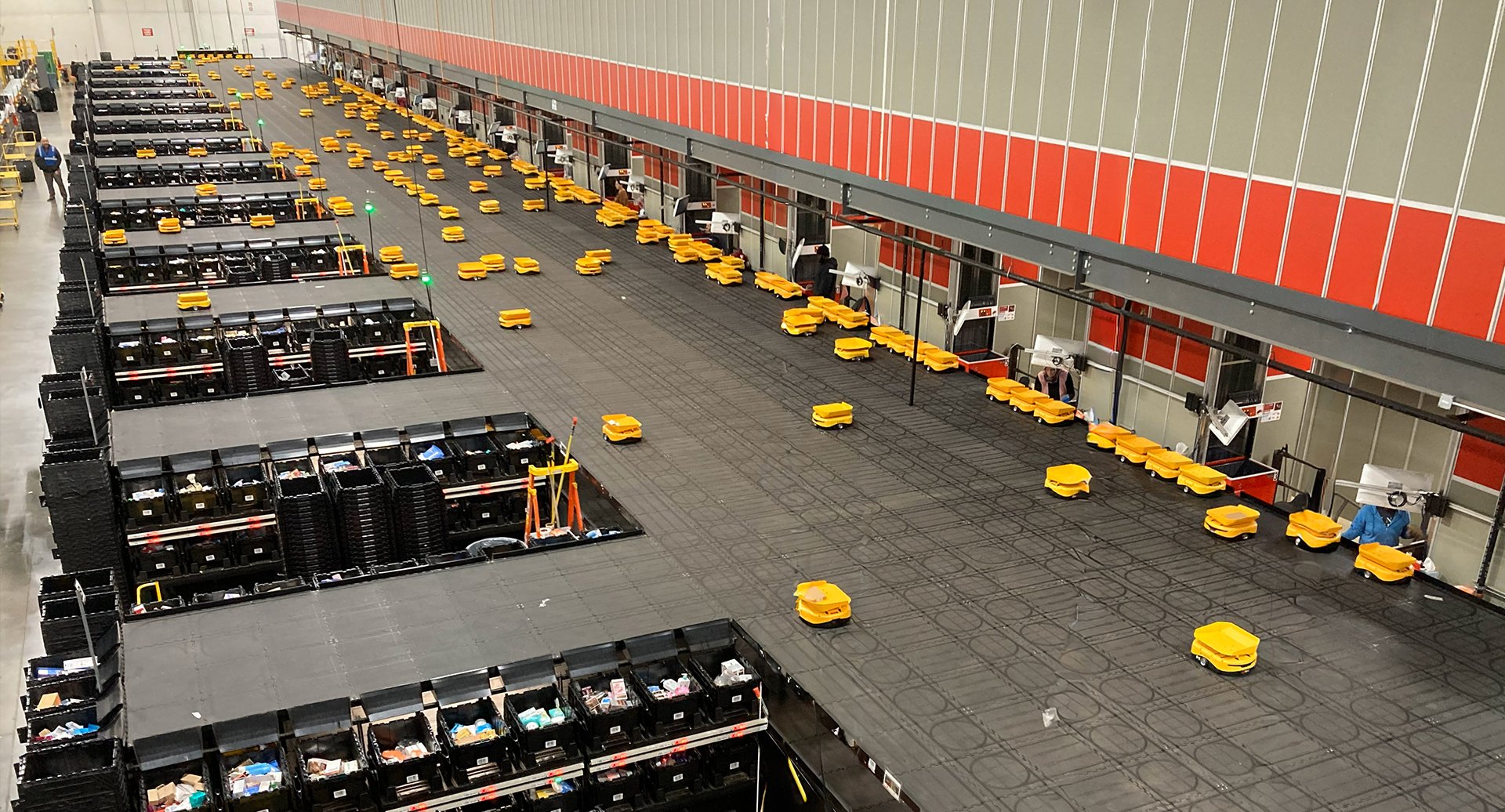
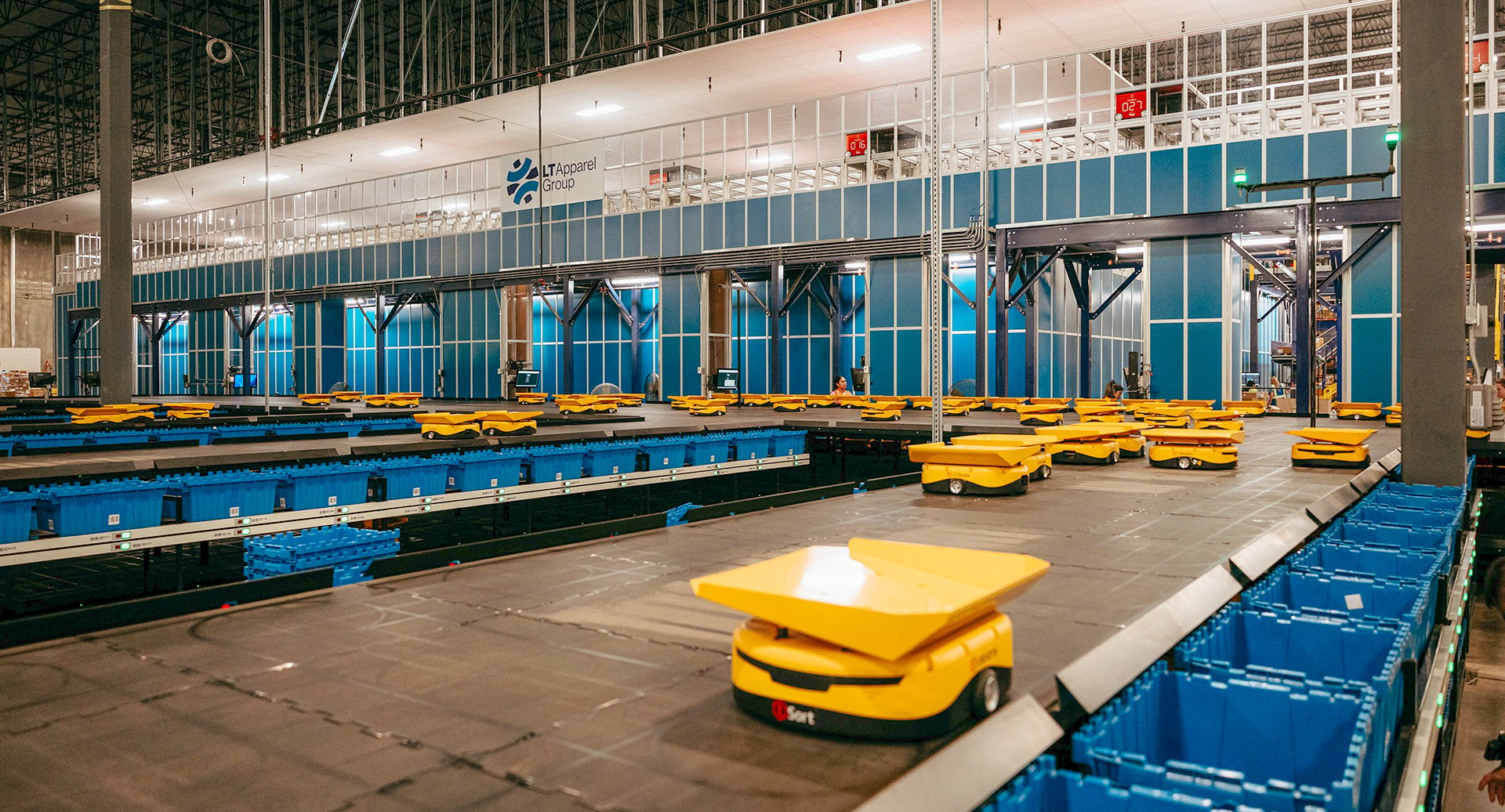
Kmart selected Tompkins Robotics tSort as the foundation for its automated sortation operation. The system uses autonomous mobile robots to transport products to designated store and department destinations, creating a flexible alternative to traditional fixed sortation systems.
The initial deployment featured 92 autonomous robots and six dual induction stations, with three stations positioned above three lower stations to maximize vertical space while minimizing the system's footprint.
Integrated weight scales and dimension scanners capture product information during induction, supporting greater inventory accuracy. The system also provides flexible handling for different product types, with fragile and oversized products directed to pallet-based destinations for safer handling.
Products are sorted by store department, helping streamline downstream stocking and make it easier for store associates to put inventory away once shipments arrive.
The system was brought from installation to full-volume production in less than five months, with full ramp-up achieved within weeks. Following the success of the initial deployment, Kmart expanded its use of tSort with two additional installations, incorporating both conveyor-fed and tipper-fed induction methods.
The Results
Improved Throughput, Flexibility, and Cost Efficiency
-
2x capacity increase across the site
- 50% reduction in capital investment compared with traditional sorter alternatives
- 60%+ reduction in required footprint
- Less than 5 months from installation to full-volume production
- 3 tSort installations deployed as Kmart expanded its automation strategy
- Improved inventory accuracy through integrated weighing and dimensioning
- Flexible handling for cases, inner packs, individual items, fragile products, and oversized products
Explore More Customer Case Studies
Discover How Tompkins Robotics Can optimize Your Operations