 Tompkins Robotics
You manage SKU complexity at scale. Whether you're handling 50,000 SKUs or 250,000, the items vary in shape, size, and attributes. It's a constantly changing environment where SKU details are often incomplete or just plain wrong. Split-case picking, where you break cases to replenish individual units for store replenishment, adds another layer to this operational reality. Unfortunately, this complexity is your operating environment.
What operators often miss is that complexity isn't a limitation to overcome. It's actually your competitive edge. But only if you deliver speed and precision together.
Speed and Precision: Inseparable at Scale
The conventional approach treats speed and precision as separate challenges. Faster sortation here. More accurate picking there. That doesn't work when you have a large and diverse SKU catalog.
Sophisticated retail operations understand the trade-off: speed without precision creates chaos. You move volume fast but it goes to the wrong locations. Stores get overwhelmed. Receiving areas clog. Back-rooms overflow. Precision without speed creates the opposite problem: you're accurate but slow. You can't handle peak season. You cap out.
Speed and precision have to operate together—especially in high-volume store replenishment environments. That's where unit sortation at scale delivers competitive advantage—when you can move massive volume and route it to exact shelf locations simultaneously.
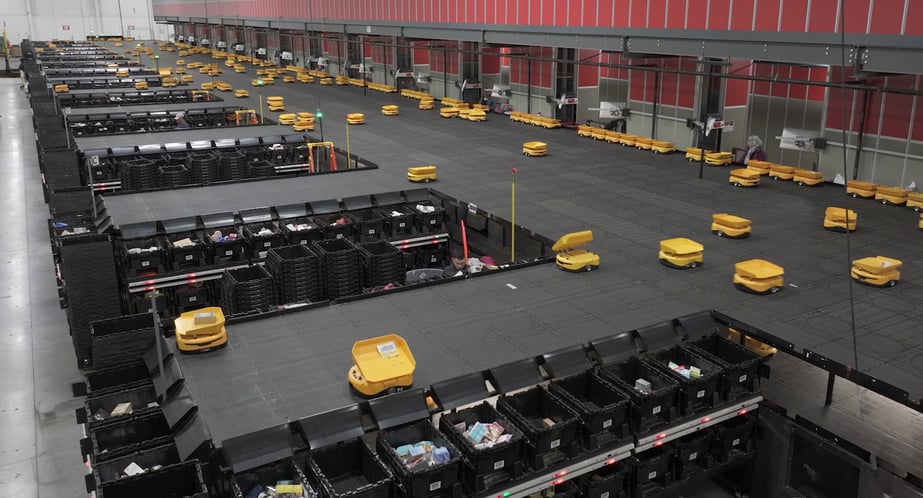
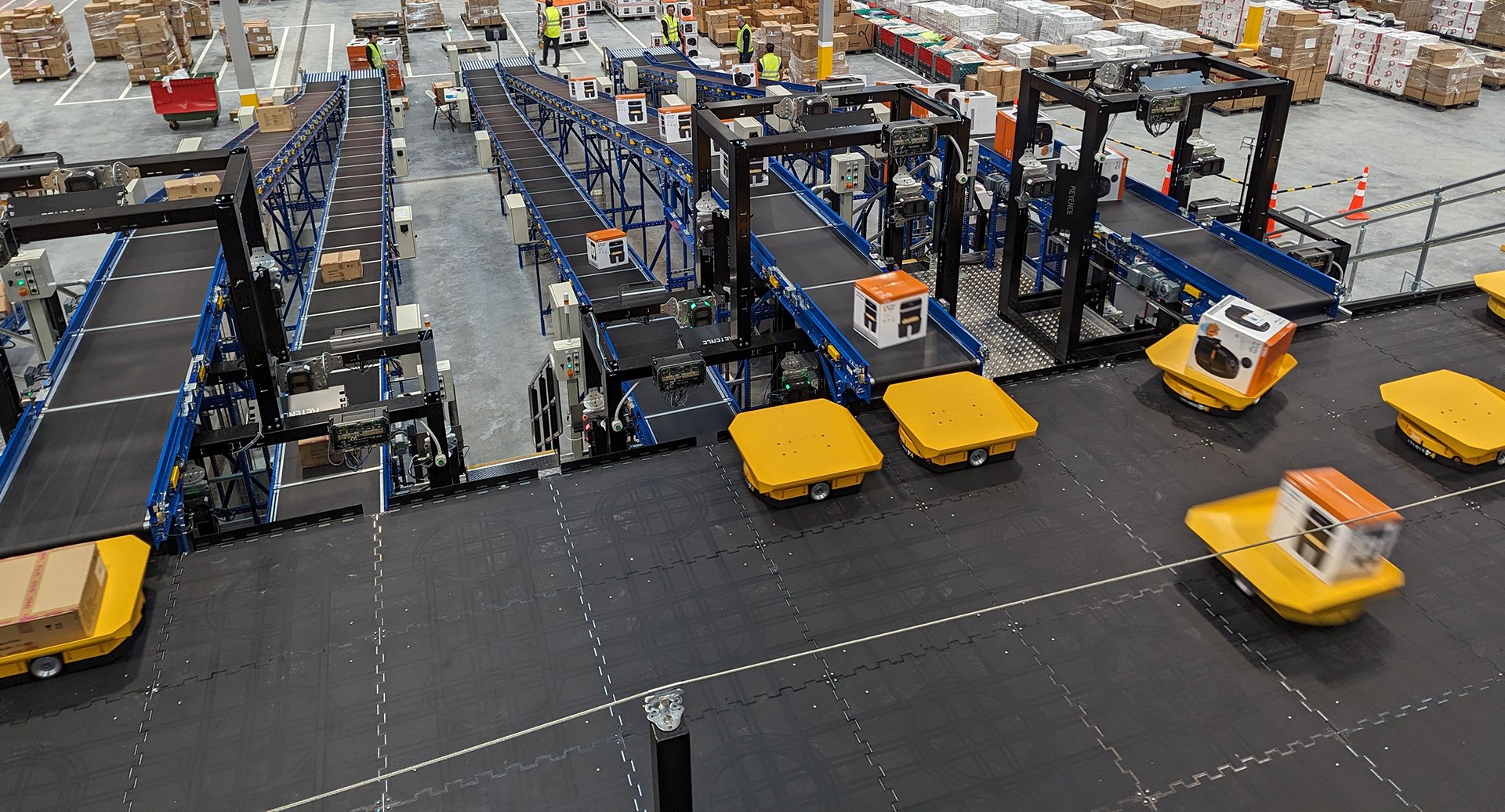
"The range of SKUs can be food, health and beauty, medical devices, car parts, motor oil, anything in a checkout area. For us with tSort, the beauty is if it fits on that tray, we can sort it." And that flexibility at speed is huge.
Complexity Scales When Both Operate Together
With a huge variety of SKUs across hundreds of store locations, you're handling speed (peak season throughput) and precision (routing to specific shelf zones) at the same moment. One without the other creates friction.
-
Speed alone: You process 50,000 units per hour but send them to generic store codes. Stores receive overstock they can't fit. Receiving chaos. Wasted labor figuring out where inventory belongs.
-
Precision alone: You sort to exact 8-foot shelf zones with perfect accuracy. But you can't handle peak demand. You leave money on the table during high-value periods.
Unit sortation at scale demands both. The speed to match demand velocity. The precision to send exactly what each store needs to exactly where associates stock it.
Precise Store Replenishment Changes the Math
Here's where the economics create advantage.
Historically, retail store replenishment was simple: send full cases fast. Regardless of what actually sold. Stores received bulk inventory and had to manually break it down, hunt for shelf space, deal with overstock they couldn't fit.
Unit sortation with speed and precision changes that. You move volume fast and send exactly what needs to be restocked, and this minimizes two expensive problems at once:
-
Back-room waste disappears: The right quantity arrives fast enough to meet demand timing. It gets stocked. Done.
-
Aisle-ready delivery streamlines execution: Products arrive organized by store aisle so every item for a section is grouped together. Shelves can be restocked quickly, with less effort and no guesswork.
-
Out-of-stock misses drop: Precision sortation at speed sends only what stores can actually stock and sell, replenishing fast enough to keep shelves full during peaks.
The result: better inventory turns and higher in-stock rates even during peak demand across your entire network.
Where Store-Level Execution Accelerates
The efficiency gains compound at the store.
Instead of receiving pallets and manually breaking them into multiple totes, associates hang one tote labeled for one specific shelf zone and stock it. No hunting. No rework. And because replenishment moves fast, they stock throughout the day to keep shelves full during high-demand periods.
That efficiency scales across hundreds of stores. One tote per zone per associate means faster re-stocking, fewer errors, better presentation. The cumulative impact during peak season is huge.
.gif?width=1152&height=648&name=Untitled%20design%20(4).gif)
The Competitive Edge
Complexity isn't your limitation. It's your opportunity. But only if your replenishment approach delivers both speed and precision at scale.
Most retailers treat unit sortation as either a throughput problem or an accuracy problem. But at high variety SKU counts, it's both simultaneously. That's where unit sortation delivers real competitive advantage for complex retail networks. Not speed alone. Not precision alone. Both operating together at scale.
Tompkins Robotics tSort is purpose-built for this reality.
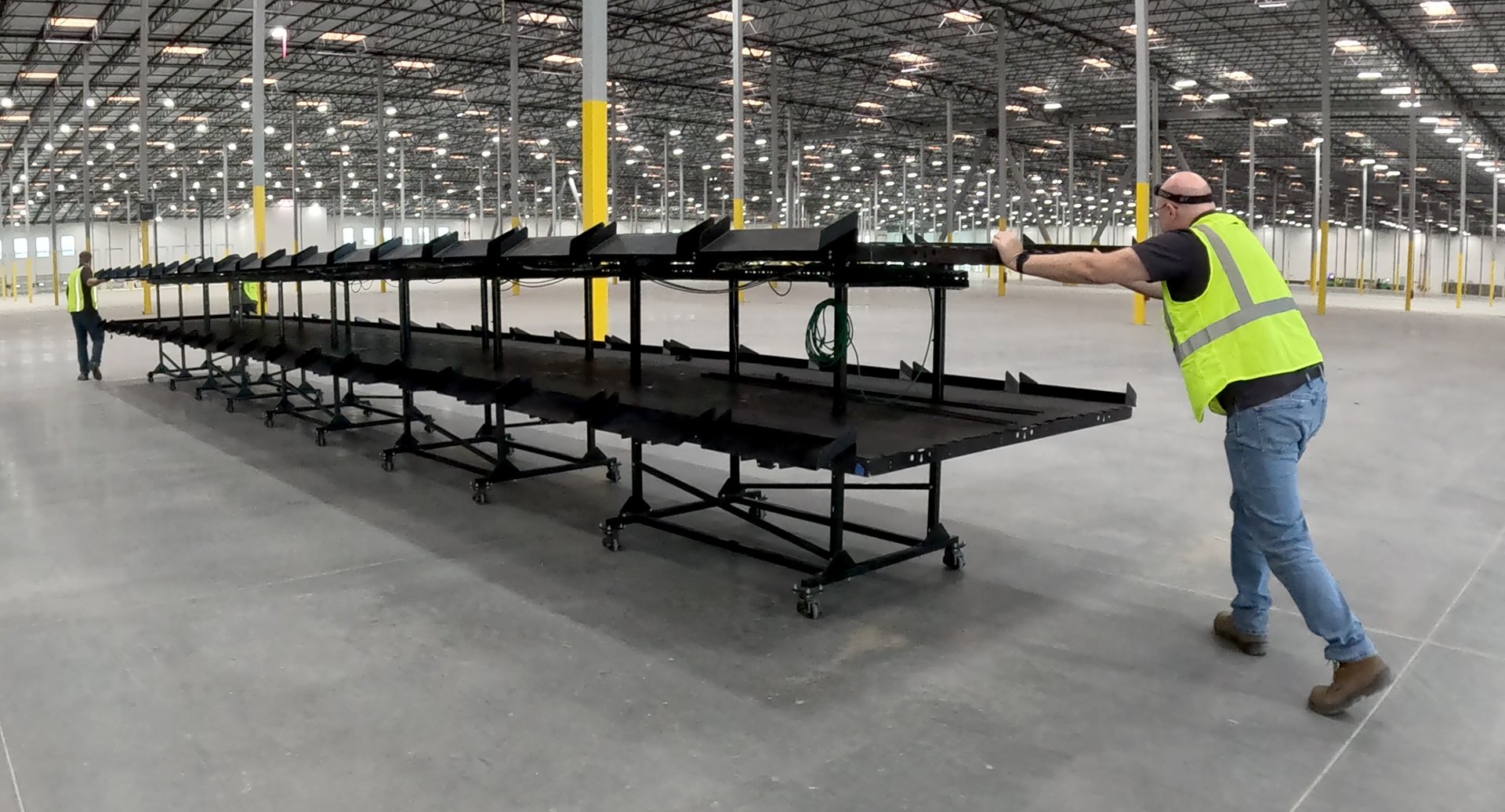
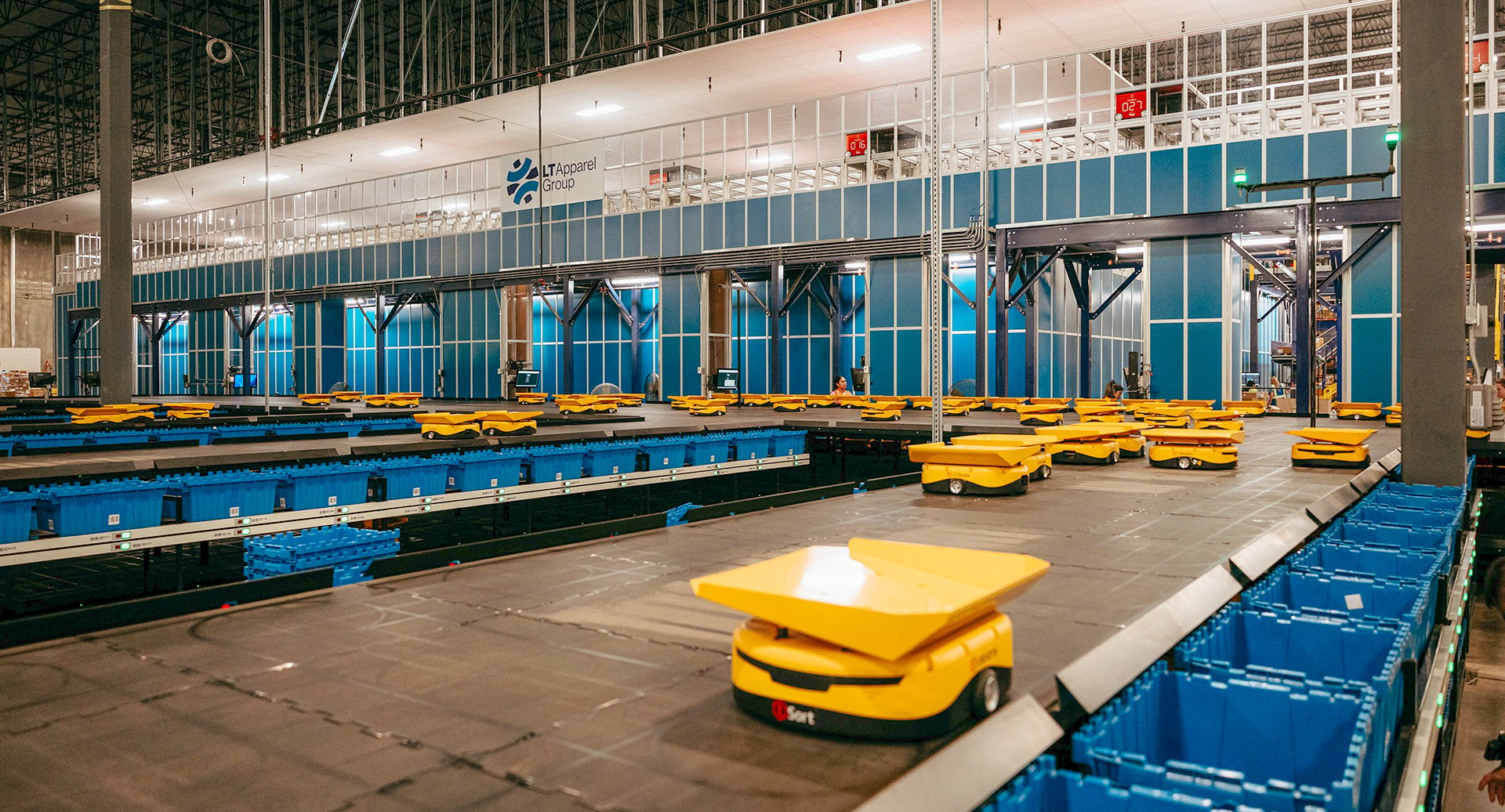
tSort is specifically designed to optimize high-volume store replenishment operations where speed and precision must operate together. It's autonomous mobile robots enable high-speed, high-precision unit sortation without fixed infrastructure, dynamically routing items to predetermined destination containers aligned to specific stores, zones, or replenishment strategies. If it fits on the tray, it can be sorted—regardless of shape, size, or category.
The result is scalable, aisle-ready replenishment: faster throughput during peak, reduced back-room waste, improved in-stocks, and store-level execution that keeps pace with demand. With tSort, complexity isn’t just managed—it’s converted into measurable competitive advantage.
Explore Our Customer Case Studies
Discover How Tompkins Robotics Can Optimize Your Operations