 Tompkins Robotics
Many grocery chains automate pharmacy fulfillment but keep center aisle operations manual. Modular robotics like tSort now bridge this gap—handling diverse SKUs, batch picking, and route- or aisle-based sorting to boost speed, accuracy, and scalability without costly fixed infrastructure.
The Central Fill Revolution
Many national grocery chains run central fill pharmacy facilities with automation for key processes like picking and sorting, the most costly and error-prone parts of fulfillment. These operations demand exceptional accuracy, consistent throughput, and dependable performance. Errors aren't an option.
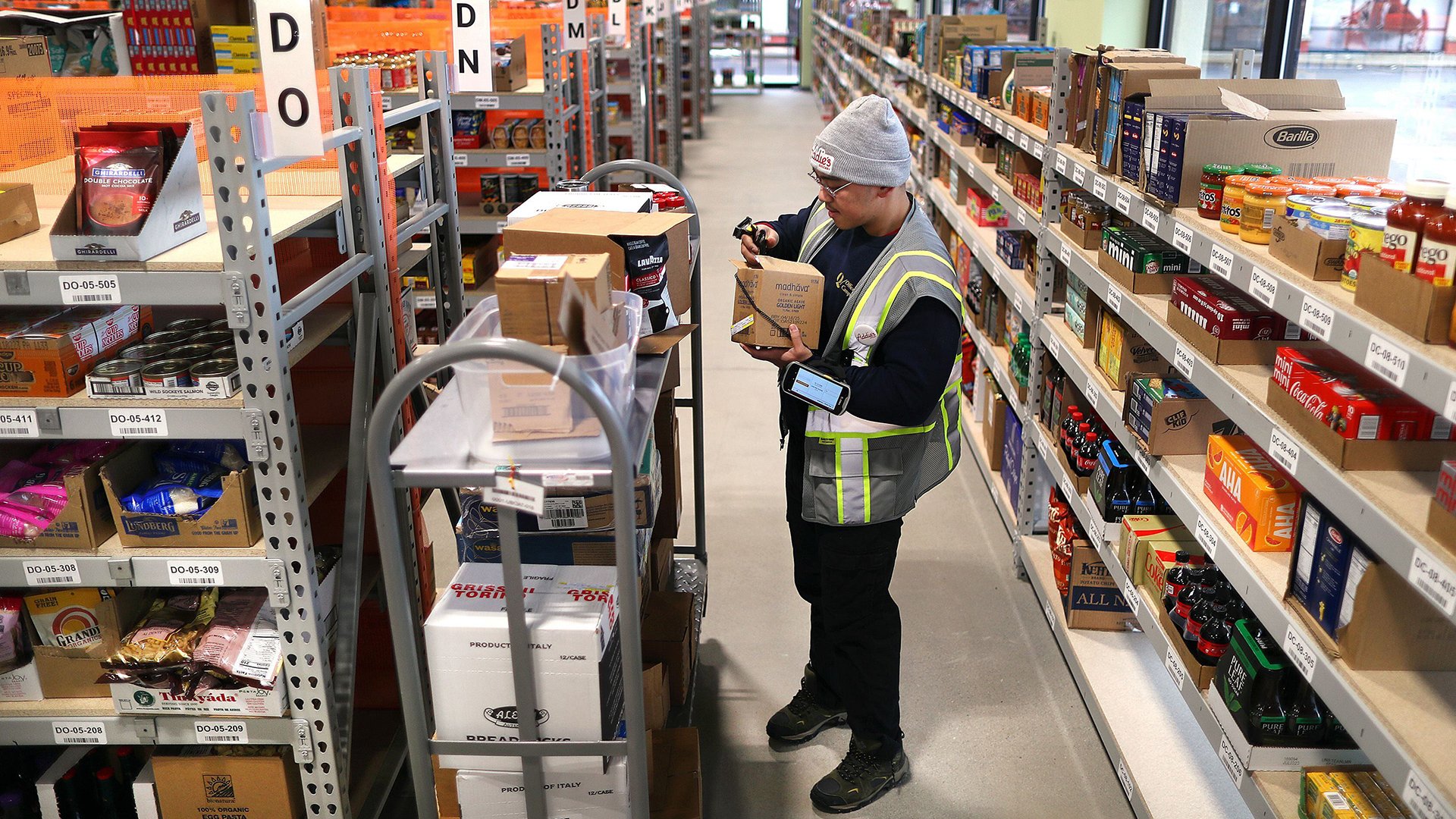
But if you walk through the same Grocery company's center aisle distribution operation you'll see something different. Associates push manual carts through long pick paths, moving loads between sort zones by hand. Two fulfillment operations under one company, operating at very different levels of automation.
This gap exists because pharmacy and grocery fulfillment have traditionally been treated as fundamentally different challenges. Pharmacy deals with small pill bottles and prescription accuracy while grocery moves cereal boxes at bulk throughput volumes. Different product profiles led to different assumptions, which led to different systems. Grocery center aisle distribution remained largely manual while pharmacy operations advanced.
That assumption no longer holds.
The same technologies that power high-accuracy, high-throughput pharmacy operations can handle the product diversity, volumes, and variability of center aisle distribution without overbuilding for peak capacity or investing in fixed infrastructure and features you don’t need.
For grocery operations leaders, there's real value in examining what your central fill pharmacy teams are doing. The automation that works there can work in your distribution centers too.
The Center Aisle Challenge
Center aisle products bring fulfillment complexity that goes well beyond a typical pharmacy operation. A pharmacy line handles bottles, blister packs, and small packages with consistent dimensions. Center aisle distribution moves cereal boxes, canned goods, beverage multipacks, and bulk packages where product sizes vary from individual cans to shrink-wrapped cases and weights range from a few ounces to 40 pounds or more.
Package types multiply the challenge further. Rigid corrugated boxes stack predictably, but soft bags shift and compress under pressure. Shrink-wrapped multipacks have irregular shapes that don't nest cleanly, and glass jars require gentle handling throughout the process. Each product category brings different handling requirements to the same operation.
High SKU counts add another layer of complexity. A typical grocery distribution center manages thousands of center aisle products with constant seasonal rotation. Holiday baking supplies arrive in November, grilling items dominate summer months, and back-to-school snacks surge in August. The product mix changes constantly while systems keep running.
Volume demands during peak periods stress manual operations even further. A distribution center that handles steady pharmacy volumes through automation still relies on workers to sort center aisle products during holiday surges. When demand spikes to four times normal levels, labor becomes the constraint. You simply can't staff enough workers to keep pace.
The Trouble with Manual Fulfillment
Manual fulfillment struggles with product diversity at scale. Workers handle each item multiple times through picking, transporting, sorting, and moving to staging. Each touch multiplies labor costs across thousands of SKUs. Workers spend over half their shift walking and transporting goods rather than adding value through exception handling or quality control.
Error rates increase with product diversity and volume, particularly during peak periods when workers operate under time pressure. Similar packaging creates confusion between products. High SKU counts increase misroutes. The faster you push manual operations, the more mistakes flow through to stores.
Labor shortages compound every other challenge. A distribution center that needs 300 workers for steady-state operations can require 1,200 during holiday peaks. Most labor markets can't support that workforce surge, which means throughput caps regardless of demand because manual operations hit staffing limits before they hit equipment limits.
Want to know how much manual sortation is costing your operations today? Try our cost calculator to see how it adds up.
AMR-Based Solutions Give You Flexibility
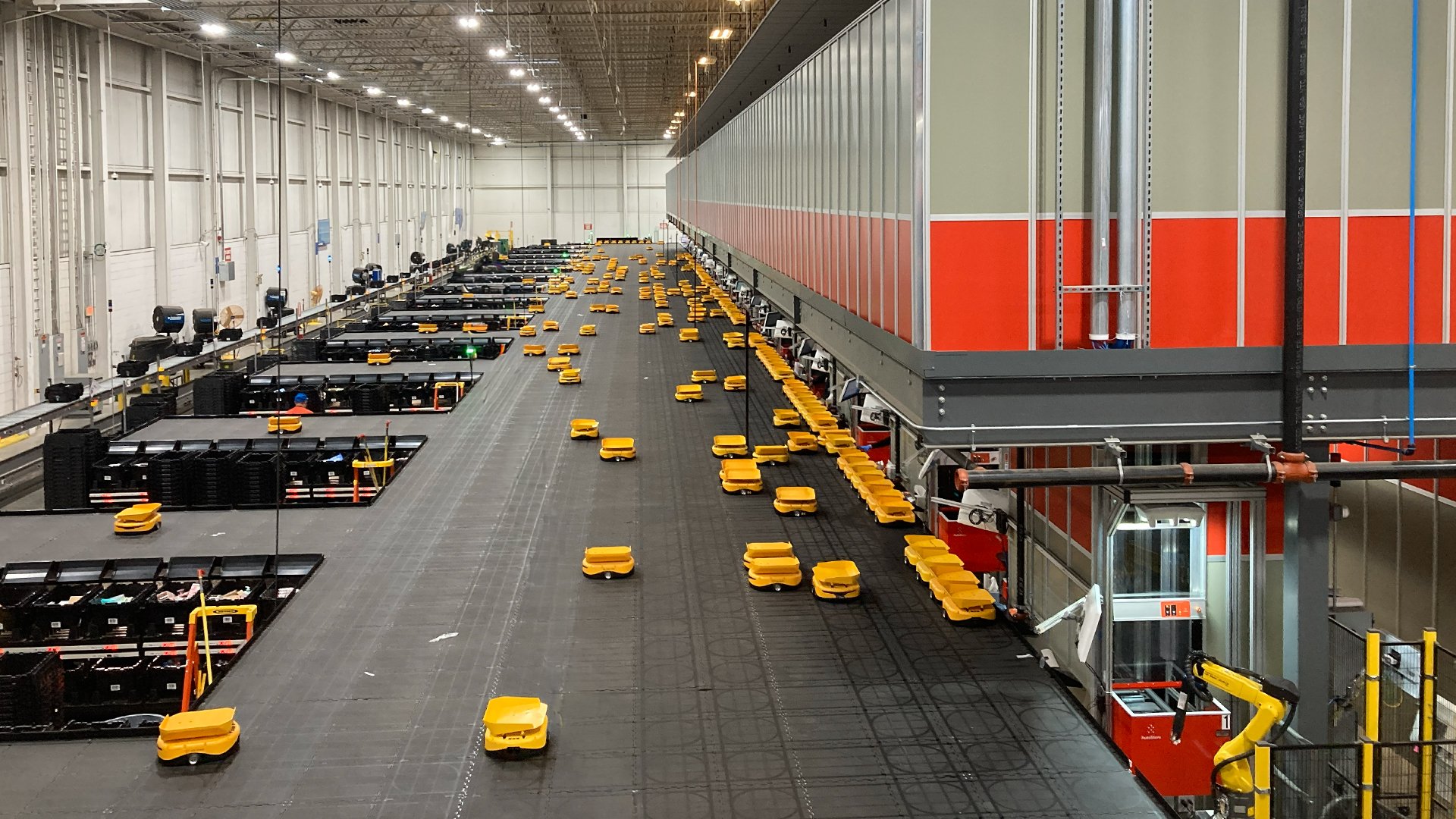
When it comes to robotic automation solutions, integrated systems like tSort change what's possible for grocery distribution. Here's what your operations start to look like with an AMR-based deployment across your facility.
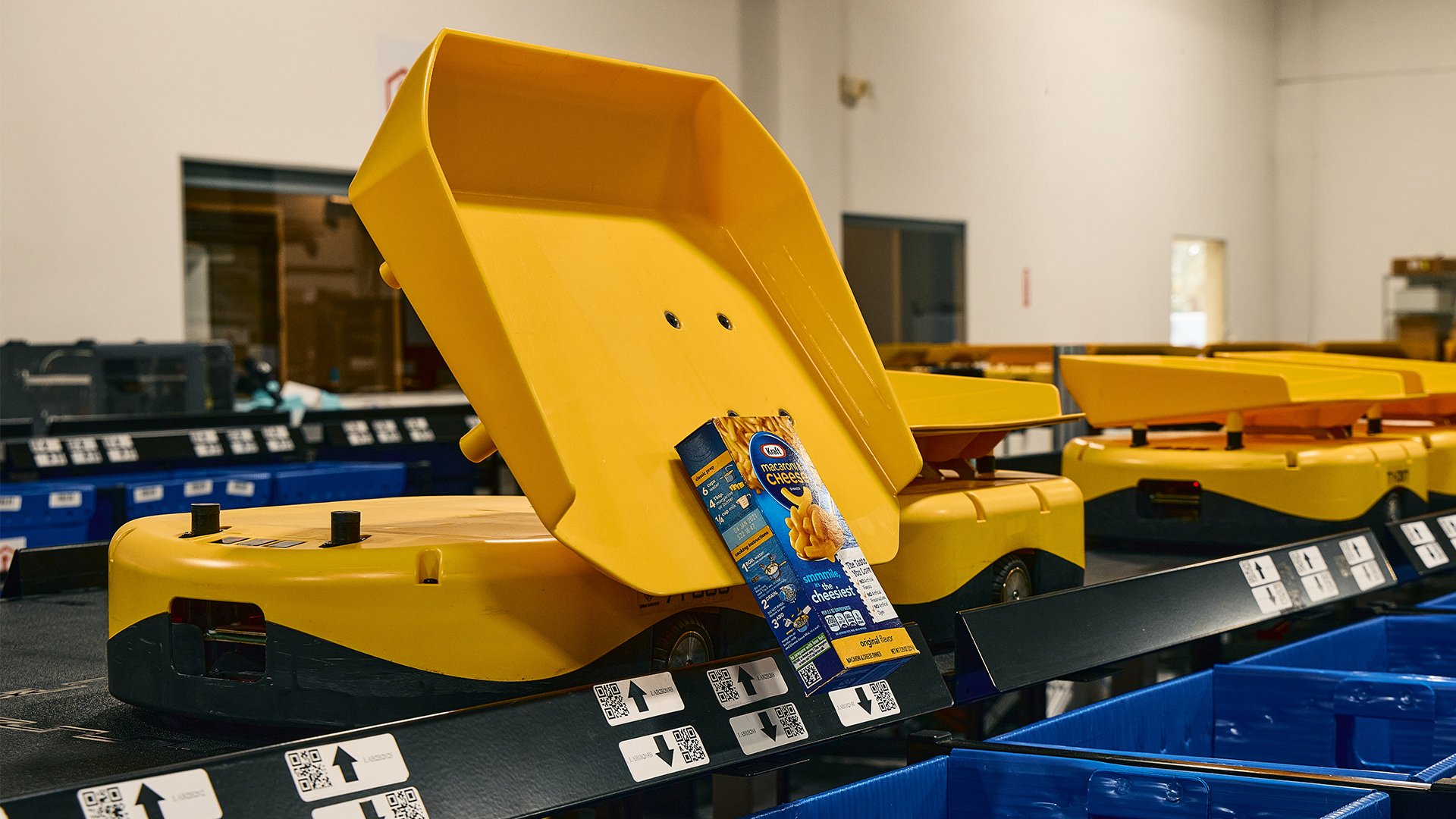
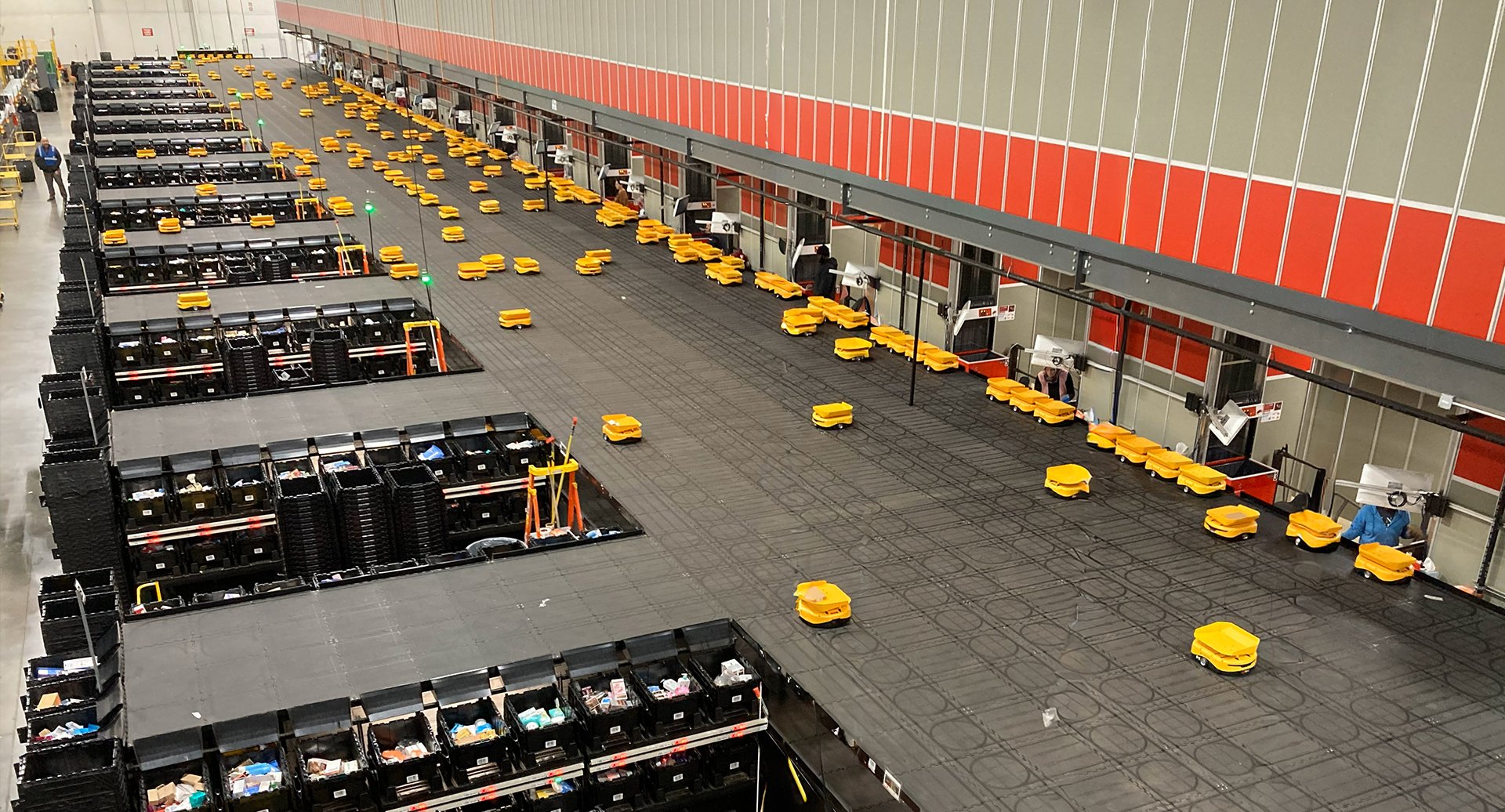
Items are batch picked based on store demand, using an AS/RS or goods-to-person system for efficiency. Small cases or eaches are sorted into totes or mixed containers. Orders are routed based on delivery route or hub, enabling faster same-day or next-day delivery while reducing pre-shipping costs. They can also be sorted by store aisle-level destinations, which improves receiving speed and allows faster shelf stocking.
Modern robotic systems can handle everything from small pharmacy bottles to bulk center aisle products without requiring unnecessary features that add cost. Traditional automation relies on heavy, static machinery that is project-specific and costly to adjust or expand. Modular systems let grocery operations achieve faster, more accurate fulfillment using the same technology that powers high-accuracy pharmacy operations.
Expanding From Pharmacy to Center Aisle
Grocers with automated pharmacy sortation can extend the same technology to center aisle operations. Tompkins Robotics' tSort is built for both applications.
Whether you're managing B2C, B2B, or omnichannel workflows, tSort can sort up to 40,000 items to over 6,000 destinations per hour including custom totes and cartons. Whether square, round, or bagged, tSort handles just about any product type that moves through grocery distribution.
tSort operates as a standalone sortation solution or integrates as part of a broader automation ecosystem, such as downstream from an automated storage and retrieval system or upstream of packing and shipping stations. At typically one-third the size of traditional sorters and without fixed infrastructure like conveyance, tSort deploys within just a few months and scales quickly to match your growth. With no single point of failure, tSort eliminates common bottlenecks and keeps operations running smoothly through peak periods and beyond.
Frequently Asked Questions
Explore Our Healthcare Customer Case Studies
Discover How Tompkins Robotics Can Optimize Your Operations